
Fatma ALFARRA1 Mirac Nur CİNER2
H. Kurtulus Ozcan3
1. Introduction
The rapid increase in the global population and its consequential increase in economic activity has resulted in significant quantities of waste being produced at the home, municipal, and commercial levels, hence playing a substantial role in the degradation of the environment (Elamin Abbass et al., 2023). The term "waste" is commonly described as any substance or material that becomes useless or unwanted for its owners, maker, or processor, resulting in a loss of its functional worth (Arenibafo, 2023). The waste can be classified based on their respective sources, including municipal solid waste, agricultural waste, biomedical waste, and industrial waste. Municipal solid waste (MSW) is produced as a result of various domestic and business activities, encompassing organic waste, paper, plastic, metal, glass, and miscellaneous substances (Debrah et al., 2021).
Solid waste management (SWM) poses a significant difficulty in the current era. A considerable number of individuals, approximately three billion globally, continue to face the absence of regulated waste management systems. A country's affluence is linked to its level of urbanization, which in turn increases the production of waste (Zoungrana et al., 2022). The management of solid waste has a combination of direct and indirect implications for various aspects of human well-being, including but not limited to health, socioeconomic factors, aesthetics, the environment, and infrastructure. The implementation of environmentally friendly approaches in collecting, transporting, and disposing of solid waste presents a potential resolution for effective solid waste management (Abubakar
1 MSc; Istanbul University-Cerrahpasa, Engineering Faculty, Department of Environmental Engineering, Avcilar, Istanbul-Turkey; [email protected]. ORCID No: 0009-0007-5240-0793
2 Res. Asst.; Istanbul University-Cerrahpasa, Engineering Faculty, Department of Environmental Engineering, Avcilar, Istanbul-Turkey; [email protected]. ORCID No: 0000-0002-9920-928X
3 Prof. Dr.; Istanbul University-Cerrahpasa, Engineering Faculty, Department of Environmental Engineering, Avcilar, Istanbul-Turkey; *Correspondence: [email protected]. ORCID No: 0000-0002-9810-3985
et al., 2022). Nevertheless, the inadequate management of waste, particularly in developing nations, hinders efficient treatment measures. Consequently, the duration required for waste disposal is substantial, and the inadequately regulated disposal of waste presents a significant peril to both the marine ecosystem and populous urban areas worldwide (Ferronato & Torretta, 2019).
The main purpose of SWM is to efficiently handle the collection, separation, treatment, and dumping of solid waste produced by various metropolitan populations. This purpose aims to ensure that these activities are conducted in a sustainable manner, taking into consideration environmental and social considerations, while utilizing the most economically feasible resources available (Khatiwada et al., 2021). The utilization of waste as both main and secondary raw materials for the manufacturing of consumer products within urban areas needs to be prioritized (OECD, 2021).
The issue of SWM in developing nations is further compounded by the indiscriminate disposal of waste, rendering it a significant environmental contaminant (A. H. Khan et al., 2022). The most popular methods of processing and managing waste in developing nations are landfilling, incineration, open dumping, and composting (Hajam et al., 2023a).
Open burning and dumping are still often used for waste disposal, despite their many negative effects on the environment (Barbhai & Sharma, 2023). Inadequate waste management practices can lead to significant environmental issues. The accumulation of waste in open landfills has deleterious effects on soil contamination and poses a threat to the integrity of the adjacent groundwater (Hasthi et al., 2023). The implementation of effective solid waste management practices has the potential to mitigate or eradicate adverse effects on both the environment and the health of humans. Additionally, it can serve as a catalyst for growth in the economy and enhance overall living standards (Das et al., 2019; Singh Rawat et al., 2020).
This study focuses on the following objectives: assessing the effects of solid waste disposal in open dumps and investigating rehabilitation strategies for open dumping sites in order to mitigate environmental and economic consequences.
2. Global Waste Production
Global production of waste is defined as the cumulative quantity of waste generated via human activities on a global scale within a designated timeframe. This waste might originate from several sources, encompassing municipal, industries, farming, medical centres, and other sectors (Höglund-Isaksson et al., 2020). The production of waste is a significant concern from both an environmental and social standpoint due to its potential to result in a range of
adverse effects, including contamination, the destruction of habitats, and threats to the health of people (Marín-Beltrán et al., 2022).
The generation of waste on a global scale exhibits a consistent upward trend, encompassing developed nations as well as developing nations. Notably, a substantial volume of waste is generated annually in countries belonging to the Organisation for Economic Co-operation and Development (OECD) (Parfitt et al., 2021). The issue of global waste production is of great significance, as evidenced by estimates suggesting that the collective worldwide waste production reached over 20 billion tons in the year 2017. This equates to an average of 2.63 tonnes of waste produced per person annually (Maalouf & Mavropoulos, 2023). MSW production, expressed in kilograms per capita, is illustrated in Figure 1 (URL 1).
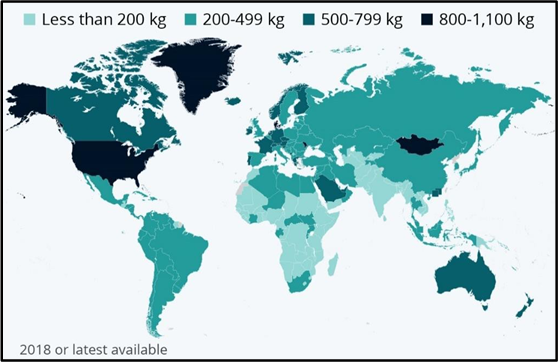
Figure 1. MSW generated per year (in kilograms per capita) (URL 1)
According to projections based on the status quo, it is anticipated that global waste production will reach 46 billion tons in the year 2050 (Mendoza et al., 2022). The quantity of municipal solid waste (MSW) constitutes a relatively smaller part, estimated to be between 2.3 and 3.1 billion tons in the year 2019, and is projected to rise to a range of 2.89 to 4.54 billion tons until 2050 (He et al., 2022). Similarly, based on a report published by the World Bank, it is projected that the yearly production of municipal solid waste could reach a staggering 3.4 billion tons by 2050 (Kaza et al., 2018).
On the other hand, the challenge of accumulating unmanaged plastic waste has become increasingly worrisome. According to estimations, the global production of unmanaged plastic waste ranged from 60 to 99 million tons in 2015. Furthermore, projections indicate that the quantity might potentially triple to reach 155-265 million metric tons annually in 2060 (Lebreton & Andrady, 2019). In developing nations, the majority of waste is primarily derived from household activities and predominantly consists of organic matter derived from plants. The escalating urbanization of communities is a prominent component that is progressively implicated in the generation of trash stemming from industrial and agricultural activities, residual chemicals, and the discharge of hazardous metals (F. F. Robert et al., 2023).
3. Waste Management
The field of solid waste management encompasses the effective management and appropriate disposal of waste materials, with the aim of mitigating adverse effects on both human health and the natural environment (S. Khan et al., 2022). For the purpose of maximizing practical advantage, the waste management hierarchy presents the preferred sequence of steps for waste reduction and management. Landfills are the final resort in waste management; prevention, reduction, recycling, and energy recovery are prioritized in the waste hierarchy (Kabirifar et al., 2020; URL 2) (Figure 2).
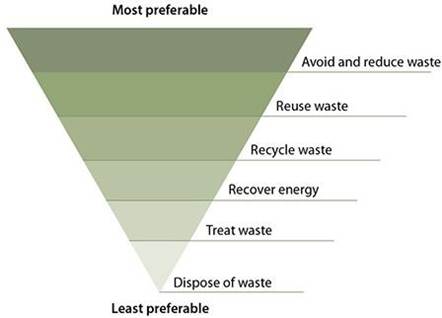
Figure 2. Waste hierarchy (URL 2)
Before being processed, MSW must be separated into recyclable, biodegradable, combustible, and non-recyclable categories in order to lessen the
negative effects (Ugwu et al., 2021). The waste materials, including paper, glass, and metals, have the potential to be repurposed in order to reduce the demand for primary resources (David et al., 2019). Furthermore, the process of remediating biodegradable waste involves the conversion of such waste into stable organic molecules, which can serve as an environmentally benign source of energy, such as biogas (Srivastava et al., 2020).
The present condition of waste management in both developed and developing countries is cause for concern, particularly in developing countries, because there is a lack of waste management methods, necessitating the implementation of environmentally sustainable and cost-effective approaches for its management and disposal (Arenibafo, 2023; Debrah et al., 2021; ULUSOY et al., 2023). Several strategies and technological approaches are employed in the field of solid waste management, encompassing incineration, recycling, landfilling, composting, and reduction (Istrate et al., 2020; Karimi, 2023). Nevertheless, the implementation of efficient waste management methods encounters various problems, including insufficient financial resources, inefficient collecting methodologies and equipment, irresponsible disposal procedures, and a lack of educated professionals in managing waste (Kurniawan et al., 2022; Li et al., 2021; Shi et al., 2021).
The current emphasis is on prioritizing reducing waste as the primary approach to address this issue,
as opposed to the former emphasis on recovering, recycling, and disposing objectives (Parfitt et al., 2021). In addition to the traditional solid waste management techniques such as volume reduction and landfilling, high-income countries (HICs) are also implementing alternative methods including vermicomposting, sustainable development strategies, and waste-to-energy systems (Alshehrei & Ameen, 2021; Hajam et al., 2023b; Usmani et al., 2020). These waste-to-energy systems encompass various processes such as incineration, pyrolysis, gasification, and anaerobic digestion, as well as the production of biodiesel, biohydrogen, biomethane, bioethanol, and butanol (Barua & Hossain, 2021; S. Y. Lee et al., 2019; Manikandan et al., 2023). One potential strategy involves the utilization of waste biorefineries, which have the capability to transform municipal solid waste (MSW) into sustainable energy sources, as well as value-added commodities and chemical compounds
(Molina-Peñate et al., 2022; Pérez et al., 2020).
4. Open Dumping for Waste Management
Open dumping and landfilling are often employed methods for the management of MSW according to their cost-effectiveness and minimal treatment requirements (Al-Wabel et al., 2022). The utilization of landfills is
suitable for waste that cannot be recycled or incinerated. Nevertheless, it requires vast expanses of land. The leachate generated from the anaerobic and aerobic decomposition of these waste materials contains components that are detrimental to the environment (El-Saadony et al., 2023; Pazoki & Ghasemzadeh, 2020). Accordingly, landfilling becomes the worst option when its negative effects on the environment, human health, the quality of the land, and the groundwater are all taken into account (Blair & Mataraarachchi, 2021; Pires & Martinho, 2019).
Landfilling has witnessed significant expansion in low- and middle-income countries (LMICs) during the past decade. One of the outcomes resulting from this expansion is the emergence of open landfills as a means of solid waste management in various regions across the globe (Idowu et al., 2019). In LMICs, landfilling is a prominent repository for a substantial portion of waste, posing a potential threat to biogas releases caused by the anaerobic decomposition of waste (Chisholm et al., 2021). Additionally, the movement of leachate in these landfills may pollute all surface and groundwater sources. The scenario becomes increasingly concerning in nations that lack protective measures and have landfills situated in close proximity to lakes (Parvin & Tareq, 2021; Zhang et al., 2021). Fortunately, developed countries have started disabling solid waste dumping by stringent regulations, waste reduction, and reuse. In these countries the waste management principle known as "Reduce, Reuse, and Recycle" (often referred to as the '3R') is widely adopted and implemented, making it less probable for this scenario to occur (Batista et al., 2021; Nanda & Berruti, 2021).
5. Composition of MSW
Waste is the byproduct of any human action, be it the routine tasks of daily living or the more involved activities of industries like manufacturing and farming. Waste encompasses a diverse range of components, which exhibit variations among nations and areas, contingent upon the prevailing cultural practices and lifestyles (Elamin Abbass et al., 2023).
The MSW is comprised of several types of waste, including recyclable, organic, combustible, and materials that aren't recyclable. In LMICs, the proportion of substances that decompose in MSW ranged from 46% to 53%. Similarly, the quantity of reusable waste in LMICs was found to be comparatively smaller than that in HICs (UNEP, 2015). MSW, with a high concentration of organic materials, is a major contributor to atmospheric pollution because it releases greenhouse gases (GHG) and leachate, which contaminate groundwater (Cheng et al., 2020; Mor & Ravindra, 2023). Figure 3 shows the composition of MSW on a global scale (Sharma & Jain, 2020).
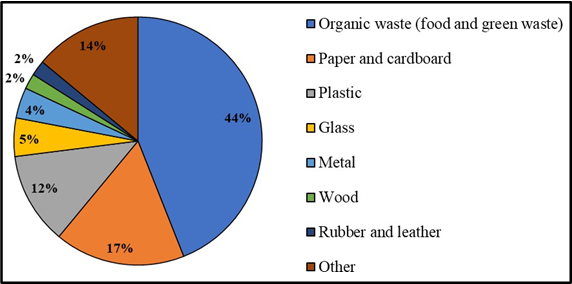
Figure 3. Global MSW Composition (Sharma & Jain, 2020)
6. Environmental Impacts of MSW Open Dumping
The phenomenon of urbanization has led to environmental degradation, posing a significant issue that warrants careful examination (S. Robert et al., 2023). Potential factors contributing to environmental degradation encompass the release of wastewater and effluents, runoff from agriculture, as well as unregulated disposal of solid waste in close proximity to water bodies (Jurado Zavaleta et al., 2021). The impacts on the ecosystem from dumping waste in the open are serious. It causes contamination in a wide variety of environments, from the ocean to the air to the groundwater (Siddiqua et al., 2022).
The practice of open disposal of MSW results in the generation of hazardous compounds that pose risks to both human health and the environment. These compounds, including dioxins and dioxin-like substances (specifically polychlorinated dibenzo-para-dioxins and polychlorinated dibenzofurans), in addition to harmful heavy metals such as nickel and cadmium, are transported into the water, soil, and atmosphere (Roy & Tarafdar, 2022). The contamination of water and soil resources on a worldwide scale is a consequence of various factors, including the transfer of leachates containing toxins, the release of GHG, and the production of odour and dust through open dumping and landfilling practices (Al-Wabel et al., 2022).
This section will cover the negative effects of open dumps for MSW on soil, air, water, and the health of humans.
6.1 Water and Soil Contamination
According to several research, open dumps continue to be the leading cause of water and soil pollution (Alao, 2023; Mekonnen et al., 2020). Additionally, the
unregulated accumulation of MSW at landfills has detrimental consequences for soil quality, leading to a predominance of acidic and sandy conditions, as well as impacting microbial populations (Mouhoun-Chouaki et al., 2019).
An issue arising from the dumping of solid waste is the degradation of organic content inside the waste, resulting in the production of leachate. The very dissolved leachate has the ability to infiltrate into the soil and into water (de Cassia Silva Bacha et al., 2021). Over and above, the process of leaching, whereby organic, inorganic, and other deleterious compounds are released from solid waste and infiltrate the subterranean water, has the potential to result in the contamination of sources of water (Abdel-Shafy et al., 2023).
Moreover, metals including cobalt (Co), cadmium (Cr), copper (Cu), lead (Pb), and zinc (Zn) may contaminate soil at landfills, which can subsequently be taken up by plants and earthworms and pose a threat to both human and environmental health (Aendo et al., 2022; Morita et al., 2021). At the same time, Contamination of surface water sources by heavy element accumulation in soil, such as Cd, Zn, and Pb, may result in biomagnification in the food chain (Gupta et al., 2019).
Another research showed that the disposal of solid waste resulted in a substantial rise in many water parameters, including conductivity, Total Dissolved Solids, hardness, and alkalinity. Additional concerns include malodorous odor, microbiological pollution, and water discoloration. The abundance of nitrogen and phosphorus led to the occurrence of elevated algal blooms in rivers and streams (Mohan & Joseph, 2021).
6.2 Air Pollution
The presence of airborne particulate matter and the accumulation of solid waste from urban areas may lead to the occurrence of contaminants in the air and the generation of smells that are unpleasant (Al-Wabel et al., 2022). As well as the practice of open dumping MSW results in the unregulated generation of landfill gases, predominantly composed of methane and carbon dioxide (Chandra & Ganguly, 2023). Moreover, current numbers imply that over 20 years methane has a global warming potential of 81.2, while carbon dioxide only has a potential of 27.9 during 100 years (IPCC, 2019). The International Panel on Climate Change (IPCC) has also noted in its most recent reports, that the level of methane has risen to above 1000 ppb during a period of the last twenty years (IPCC, 2019). In light of a substantial rise in methane emissions from MSW, comprehensive investigations have been conducted to analyse the possibility of production from MSW and explore effective methods for converting it into energy forms. These efforts aim to mitigate its release into the environment (Hai et al., 2023; Naveenkumar et al., 2023; Yang et al., 2023). Increased greenhouse gas emissions are directly attributable to the widespread practice of open waste dumping in developing countries (Ferronato & Torretta, 2019). Specifically, landfill gases are released when biological waste is decomposed by bacteria in anaerobic environments (US EPA, 2023; Meyer-Dombard et al., 2020). On the other hand, several variables influence how much methane gas is released from an open dumpsite, like the overall amount of garbage dumped, the weather, and the way the waste is collected (Pujara et al., 2023). In a recent report conducted by the United States Environmental Protection Agency (USEPA), it is emphasized that landfill methane emissions in the United States contribute to around 17% of the overall methane production (US EPA, 2022). By 2030 and 2050, developing countries are projected to account for 64 and 76% of global greenhouse gas emissions, up from their 29% share in 2000 (Rafiq et al., 2018).
6.3 Impacts on Human Health
Moreover, the indiscriminate disposal of MSW through open dumping practices has the potential to engender adverse health consequences for individuals residing in close proximity to these dumping sites. Such health risks encompass diseases such as skin and ocular irritation, elevated body temperature, respiratory distress, gastrointestinal disturbances, and a range of other ailments (Dixit et al., 2023).
Open dumping additionally exposes people's health at risk since it can contaminate subterranean water supplies and release gases that can affect nearby populations in ways that can cause cancer.
Moreover, this type of illegal landfill has the potential to trap various creatures and establish favourable conditions for the proliferation of pests, notably mosquitoes, so exacerbating both health and environmental risks (Chireshe et al., 2023).
7. Open Dumping Rehabilitation:
A Way to Reduce Environmental and Financial Impacts
Extensive environmental degradation on Earth has prompted significant study efforts toward contamination mitigation and rehabilitation. The rehabilitation procedure encompasses the transformation of polluted areas into gardens and the establishment of nurseries for ornamental plants. The economic benefits of collecting biogas and leachate from the MSW treatment process can be significant for governments. In addition to the economic advantages, the implementation of suitable methods for the extraction of hazardous compounds from MSW has the potential to yield societal benefits. In contrast, the
implementation of suitable waste removal solutions necessitates a larger investment and incurs higher costs for maintenance and operation.
The implementation of rehabilitation solutions for open dumping areas is crucial in addressing the risks to health and the environment that are inherent to these unregulated and filthy waste disposal regions. These sites have the potential to contribute to the contamination of soil and water, the devastation of habitats, and the dissemination of illnesses. Below are a few commonly employed techniques for rehabilitating open dumping sites: landfill mining, soil capping process, landfill gas collection system, bioremediation, revegetation, and phytoremediation.
7.1 Landfill Mining (LFM)
Landfill mining is a method that involves extracting valuable materials from dumping sites. This method has the potential to be a viable alternative for promoting environmental development and managing waste effectively (Zoungrana et al., 2022). LFM entails the removal of waste from a landfill site that has been closed for a lengthy time, typically spanning many years. Throughout this time, the dump has ceased to receive waste and the natural breakdown of waste has significantly decreased (Somani et al., 2020; Zari et al., 2022).
In the current world situation, with its expanding demands for resources, increasing prices of raw materials, dwindling natural reserves for critical commodities, and worsening environmental issues, LFM presents an opportunity for obtaining resources from alternative sources (Jain et al., 2023). Extracting resources from both current and upcoming landfills can result in the utilization of secondary materials and energy, hence minimizing its spatial footprint (Singh & Chandel, 2020). The aforementioned demonstrates that LFM aligns with the EU Roadmap for a Resource-Efficient Europe, which aims to minimize the need to acquire new lands by 2050 (Pitak et al., 2023).
Although there has been growing attention towards LFM and its progress over the past twenty years, the release of dust from mining and landfill mining activities into the environment continues to be a significant problem for public health (Article Author et al., 2019; Cappucci et al., 2020; Qarahasanlou et al., 2022). This is particularly important in cases where old landfills possess the ability to create pollution (H. Lee et al., 2023). The qualities of the mining waste components are influenced by the level of deterioration, kind, and age of the waste. The waste that has been retrieved primarily comprises of soil-like substances, plastic, metal, glass, textile, ceramics, and stones. The predominant
constituent of the extracted waste is a substance resembling soil (Cheela et al., 2023; Han et al., 2024).
7.2 Soil Capping Process
This step would occur as the initial corrective measure that should be implemented while the landfills are finally decommissioned. A landfill cap is a complex structure consisting of multiple layers that are designed to limit the amount of water that seeps into the waste dumped in the landfill. It also helps to minimize the generation of leaches and prevent the unrestricted discharge of landfill gas through the environment. In addition, physically separating waste from organisms such as animals and plants (Ahmed S. et al., 2022).
The choice of capping form for a site is contingent upon various aspects, such as the nature and levels of pollutants, the site's dimensions, the precipitation levels in the location, and the expected later utilization of the land. The hydraulic conductivity (k-value) of components utilized in the building of a hydrodynamic border in waste retention infrastructure is a crucial criterion for assessing the effectiveness of landfill topping layers.
The process of constructing a cover may range from the simplest method of covering mildly polluted soil with one layer of materials to the most complex approach including multiple layers of various materials to separate highly polluted wastes (as shown in Figure 4) (US EPA 2012).
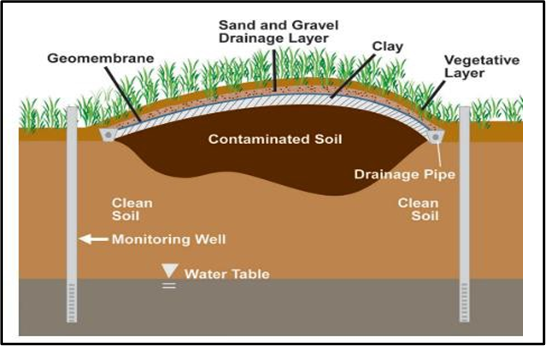
Figure 4. Different layers in landfill capping (US EPA 2012).
7.3 Landfill Gas (LFG) Collection System
Landfills that include a mixture of different types of solid waste produce LFG due to the breakdown of organic materials in the waste through anaerobic degradation. The LFG consists of methane (CH4) making up around 45 to 60%, carbon dioxide (CO2) comprising 40 to 60%, and several other small components (Wong & Zawadzki, 2023). The primary objectives of implementing LFG collection are to limit the movement of LFG to areas outside the landfills, decrease discharges on the surface, safeguard groundwater, manage odors, at the same protecting the landfill cover, and create financial resources (Smallwood et al., 2023).
The quantity of LFG that is actually collected is a measure of how efficient a landfill gas collecting system is, and the level of performance that may be attained at any given time is extremely dependent on the landfill's circumstances (Anshassi et al., 2022; Wong & Zawadzki, 2023). In this context, landfills that are closed and covered produce a greater amount of gas for collection than open landfills that are not covered (Borisova et al., 2023).
7.4 Bioremediation
Bioremediation refers to the use of microorganisms or plants to degrade harmful contaminants into carbon dioxide, water, microbial biomass, and less dangerous by-products, which are then removed from the natural (Malik, 2022). In order to achieve optimal bioremediation results, it is crucial that bacteria act in enzymatic degradation of pollutants, converting them into non-toxic substances (Tamang, 2022). Moreover, For the most effective degradation of polluted materials, such as hydrocarbons, chlorinated chemicals, and toxic heavy metals, bioremediation is the approach of choice (Hassan et al., 2022; Malik, 2022). Although microorganisms can not metabolize heavy metals, they may be employed to modify their valence states, therefore converting them into stationary or less hazardous forms (Hassan et al., 2019).
On the other hand, pollutants can lead to a decrease in soil biodiversity. However, microorganisms that can resist contamination have the ability to survive because of their flexible metabolism. This can possibly lead to the creation of new microbial populations (Selvarajan et al., 2022). Additionally, converting current landfills into bioreactor landfills may reclaim important land space and efficiently manage leachate remediation (Sughosh et al., 2021).
According to the study of Muksy & Kolo (2023), one of the major challenges is leachate from landfills, which is hard to remove and causes stratification in waters due to its dangerous circumstances. Furthermore, bioremediation
technologies can be employed for the treatment of the leachate, offering enhanced efficacy as well as economic and environmental benefits (Muksy & Kolo, 2023).
7.5 Revegetation
Revegetation refers to the process of returning plants, whether they are horticulture or native to the area that has been impacted (Statius, 2019). Native plants can be utilized as treatment agent due to their ability to create a self-sufficient environment, reduce the requirement for fertilizer, pesticides, and water, low upkeep costs, possess inherent adaptability to local conditions, exhibit lasting characteristics, and demonstrate stress tolerance (Song, 2018). Revegetating landfill sites may enhance environmental quality through the promotion of soil formation, augmentation of microbial biomass, improvement of fertility, and reduction of LFG releases (Wen et al., 2023). The conversion of polluted areas into green spaces is important due to its ability to enhance soil performance, provide recreation possibilities, and stimulate the local economy (Pang et al., 2020).
When first preparing to revegetate a site, it is important to handle some practical difficulties. One of them is seedbed preparation, which involves tasks such as levelling the surface, breaking up large clods, and minimizing the prevalence of weeds (Statius, 2019). Another process incorporating legumes into the mixture provides a rich supply of soil nitrogen. In addition, mulch like straw, wood chips, or plastic sheeting is used to protect planting sites before plants are established. Moreover, watering is essential for revegetation in certain areas to promote the healthy growth of plants and prevent the need for replanting in the event of a dry (DWER, 2018). As well as it is advisable to utilize plant seeds that have been certified as free from weeds in order to prevent the entrance of invasive species that can be challenging to eradicate once they have established themselves. Finally, Grazing management is necessary to prevent over browsing by wildlife and ruminants, which can leave a recently planted site susceptible to invasive species (Saljnikov et al., 2022).
7.6 Phytoremediation.
Phytoremediation methods involve employing plants, such as trees and grassland, to remove contaminants from soil, water, or air. Its landfill site treatment has been extensively researched due to its straightforwardness, low operation and maintenance expenses, and environmentally beneficial nature (Kanwar et al., 2023; Kumar Tyagi & Ojha, 2023; Ramos-Arcos et al., 2019). Furthermore, phytoremediation involves the process of plants absorbing and storing toxins in their leaves, enabling the future collection and elimination of
these pollutants (Hogland et al., 2020). Similarly, plant roots absorb toxins, and these pollutants are broken down by soil microbes through biodegradation. In addition, phytoremediation entails the immobilization of inorganic pollutants in the vicinity of the plant's roots, preventing their migration through the groundwater (Sekhohola-dlamini et al., 2022).
The choice of plants in phytoremediation plays a crucial role in determining the performance of this method. The selected plants must have resistance to high saltiness, ammonium-rich leachate, and have the potential for phytoremediation as well as growth. Appropriate plant types are selected eliminating any edible plant to prevent bioaccumulation. Some examples of these plants include Bambusa sulfurea, Agave sisalana, Tradescantia spathacea, Chrysopogon zizanioides, Chlorophytum comosum, Scadoxus multiflorus, and Zephyranthes robusta (Khapre et al., 2022).
8. Monitoring and Control
An important aspect of ecosystem protection for a landfill site is the implementation of a post-closure control and monitoring program. The length of time for post-closure control may vary based on variables such as landfill stabilization methods and the composition of the waste. Thorough management is necessary to prevent obstacles and enhance the likelihood of effectively implementing sustainable disposal solutions. The following are many important steps often involved in such a program:
Landfill Cover Repairs: Consistent upkeep of the landfill cover is crucial in order to avert erosion, reduce infiltration, and manage gas emissions. This may include regular inspections, repairs, and vegetation control (Grossule, 2020).
Leachate Management: The liquid generated inside landfills, known as leachate, needs appropriate management to avert the pollution of groundwater. Post-closure plans often include measures for the installation of leachate collecting and treating systems, along with periodic monitoring to ensure their efficacy (Zahari et al., 2022).
Surface Water Management: The implementation of strategies to regulate the flow of surface water, such as the maintenance of drainage systems and erosion controls, serves to prevent the pollution of adjacent water bodies (Tallaki et al., 2023).
Groundwater Monitoring: The ongoing surveillance of groundwater quality is crucial for the early detection of any possible pollution caused by leachate. Tracking wells are often positioned around the boundaries of the landfill, and samples are frequently collected and examined (Cuciureanu et al., 2020).
Gas Monitoring: Continuous monitoring of landfill gas emissions is essential for ensuring the regulation and effective handling of potentially hazardous gases such as methane. Gas collecting systems are often built and monitoring involves routine testing and maintenance (Scheutz & Kjeldsen, 2019).
Monitoring the stability and settling of the landfill: is necessary to guarantee its over time structural integrity. Periodic inspection and surveys aid in the detection of any problems that could need remedial actions (Pasternak et al., 2023).
Finally, Table 1 provides a concise overview of the control necessary throughout both the active (operational) and passive (post-closure) stages of a landfill (Zahari et al., 2022).
Table 1: Landfill Monitoring Elements
|
Element |
Parameter |
Active Phase |
Passive Phase |
|
Leachate |
Qualitative and Quantitative analysis |
Monthly |
Phase I: First 5 years (every 6 months) Phase II: Once a year until all work in the landfill site is finished. |
|
Gas |
Methane (CH4) Carbon dioxide (CO2) Oxygen (O2) |
Monthly |
Phase I: First 10 years (every 6 months) Phase II: Once every two years until all activities are finished. |
|
Surface water |
Surface water |
Phase I: The first year-Monthly Phase II: After the first year- Quarterly |
Phase I: First 5 years (every 6 months) Phase II: Once a year until all activities are finished. |
|
Protection layers |
Sensors for a barrier layer monitoring system. |
Continual |
Continual |
|
Structure and cover slope stability |
Stability of waste covering layer. Quantity and kind of waste discharged. Monitoring landfill subsidence. |
Yearly |
Yearly |
9. Conclusion
In terms of rehabilitating polluted sites, especially previous landfills, the landfill mining, soil capping process, landfill gas collection system, bioremediation, revegetation, and phytoremediation approaches can all play an
important role and have beneficial effects on the environment and biological diversity.
These approaches may not just rehabilitate biodiversity but also remediate air and water. Furthermore, the right choice of plants that have great potential for remediation of polluted sites, with reduced cost could be an essential part in enhancing the environment.
Comments (0)
Leave a Comment & Rating
No comments yet. Be the first to comment.